
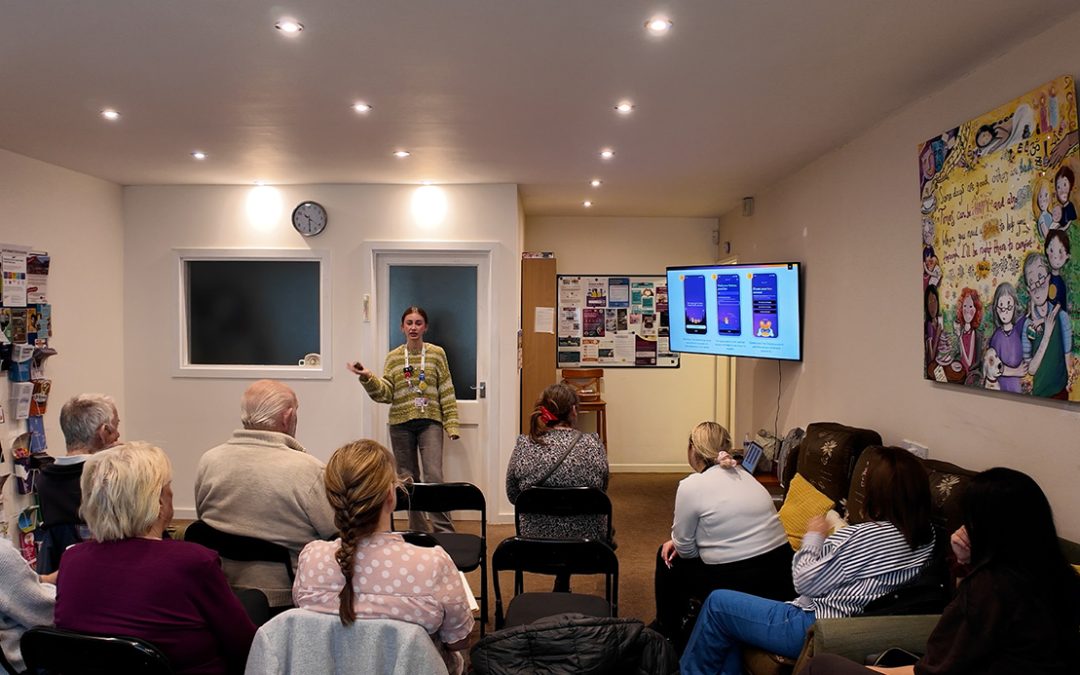
We were pleased to welcome Elena, Engagement Lead for Kooth, to Sefton Support Group for our latest Community Wellbeing Session.
Elena joined us to introduce members to Soluna by Kooth, the new digital mental health and wellbeing service for children and young people.
During the session, Elena explained how the service works, who can access it and the different types of support available, while also answering a wide range of questions from members about mental health support for young people.
What Is Soluna by Kooth?
Elena explained that Soluna by Kooth is the next chapter of the mental health support previously provided through Kooth, building on more than 25 years of experience supporting children and young people.
The service is free to access and is commissioned through NHS Integrated Care Boards and local authorities. In our area, support is available to children and young people aged from 10 through to 25 years old.
Young people do not need a referral to use the service. They can create an account themselves and begin accessing support directly through the website or app.
Elena highlighted that this can be particularly valuable for young people who may not feel ready to approach a GP, counsellor or another professional face to face.
Support Without a Waiting List
One of the key benefits Elena discussed was the accessibility of the service.
There is no waiting list simply to access Soluna. Once a young person creates an account, they can begin exploring the available resources and support straight away.
Many of the self help tools are available 24 hours a day, while professional support is also available during extended hours.
This means young people can access support at a time and in a way that may feel more comfortable for them.
A Range of Different Support Options
Elena demonstrated the Soluna platform and explained the different areas available to users.
These include articles and information about different mental health and wellbeing topics, interactive activities, journalling, goal setting, breathing exercises and other tools designed to help young people develop healthy habits and coping strategies.
There is also a moderated community area where users can read about other young people’s experiences, share their own thoughts and respond to posts.
Elena explained that content posted within the community is moderated before it goes live, helping to create a safer environment for young people using the platform.
One to One Support with a Professional
Soluna also provides access to one to one text based support with mental health professionals.
This can be particularly useful for young people who may find traditional face to face conversations difficult or intimidating.
They do not need to appear on camera or speak out loud. Instead, conversations can take place through text, giving users the opportunity to communicate in a way that may feel much more familiar and comfortable.
Young people can either use the live chat service or, in some cases, book a session with a practitioner they feel would be a suitable fit for them.
Different Levels of Support
Elena also explained that not everybody using Soluna will need the same level of support.
Some young people may simply want access to information, activities and the community, while others may benefit from one to one professional support.
For those requiring more structured help, the service can provide a series of sessions with a named practitioner.
Where somebody has more complex needs and may benefit from specialist or face to face support, Soluna can also help identify those needs and support an onward referral to an appropriate external service.
Safety and Moderation
A significant part of Elena’s presentation focused on safeguarding.
She explained that Soluna is a healthcare service rather than a social media platform, with community spaces actively moderated and content tailored according to age.
Users cannot privately message one another. One to one messaging takes place between the young person and a professional practitioner.
Elena also explained that the counselling and peer support areas are human led, rather than relying on AI chatbots.
If a practitioner identifies a significant safeguarding concern or believes a young person may be at high risk, there are escalation procedures in place which can involve working with healthcare teams, social care, emergency services or parents and carers where appropriate.
Making Mental Health Support More Accessible
Accessibility was another important area covered during the session.
Elena spoke about how text based support can remove some of the pressures associated with eye contact, verbal communication and reading social cues.
The service also works with screen readers and voice activation software, and practitioners are trained to communicate in clear and accessible ways.
Young people can also choose practitioners based on factors such as areas of focus, pronouns and other preferences, helping them find somebody they may feel more comfortable speaking to.
What Are Young People Seeking Support For?
During the question and answer section, members asked Elena about some of the most common reasons young people use the service.
She explained that stress and anxiety consistently feature among the most common presenting issues, alongside areas such as family relationships and depression.
Members also asked about support for young offenders, neurodivergent young people and those experiencing more complex mental health difficulties.
Elena explained that there is no threshold a young person needs to meet simply to access the service. Anyone within the eligible age range can use Soluna, with the level and type of support then tailored according to their needs.
Support When Young People Need It
One particularly interesting discussion looked at why digital support can sometimes help young people take the first step towards asking for help.
For somebody who feels nervous about sitting in a room and speaking to a counsellor, being able to communicate by text can provide a more comfortable starting point.
Elena explained that this can help young people build confidence and, where appropriate, prepare them to access other forms of support in the future.
She also stressed that Soluna is not a crisis service. Where immediate crisis support is required, users are signposted towards appropriate crisis services.
A Really Useful Introduction to Soluna
The session generated plenty of questions from our members and gave us a much better understanding of the support now available to children and young people through Soluna by Kooth.
For organisations such as Sefton Support Group, it is also incredibly useful to understand what services are available locally so that we can help signpost families and members when they ask us where support may be available.
A huge thank you to Elena from Kooth for taking the time to visit us, explain the new Soluna service and answer so many questions from the group.
It was a very informative session and another great opportunity for our members to learn more about the support available within our wider community.
