
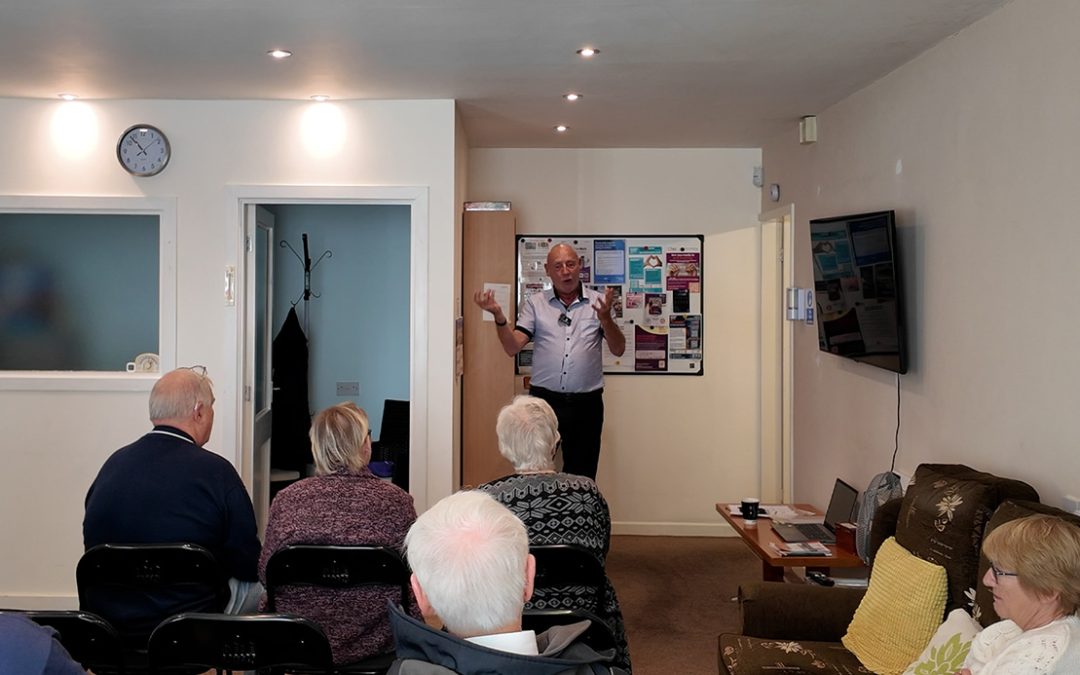
Andrew Spencer from Silvertime Legal joined us at Sefton Support Group for a really informative Community Wellbeing Session looking at estate planning and the importance of putting the right arrangements in place for the future.
Andrew explained that estate planning broadly centres around three areas: wills, trusts and powers of attorney. Drawing on his experience as an estate planning consultant and his previous work as an independent financial adviser, he talked our members through how each of these can play a different role when planning what happens to your finances, property and other assets.
One of the main themes running throughout the session was that having a will is important, but it may only be one part of the wider picture.
Andrew described a will as a way of distributing the assets that remain when someone dies, while much of the wider estate planning process is about thinking ahead and considering what could potentially happen to those assets during a person’s lifetime.
Understanding Inheritance Tax
The first area Andrew explored in more detail was inheritance tax.
Using a number of example scenarios, he explained how inheritance tax thresholds can affect estates and why the value of someone’s property, savings and other assets can sometimes add up to considerably more than they initially realise.
He also discussed lifetime gifting and the rules that may apply when money is given to family members before death, including the seven year period that can apply to certain gifts.
Later in the session, members asked further questions about gifting money to children and grandchildren, giving Andrew the opportunity to explain some of the allowances and considerations that can apply.
What Is Sideways Disinheritance?
Another interesting part of the session was Andrew’s explanation of what is sometimes referred to as sideways disinheritance.
He used an example where one partner dies and the surviving partner later remarries. Depending on the arrangements in place and what subsequently happens, assets originally intended for children could potentially end up passing elsewhere.
Andrew also discussed how changes in family circumstances, including divorce, can create additional considerations when deciding how and when an inheritance should be passed on.
This led into a wider discussion about trusts and the role they can sometimes play in protecting and controlling how assets are eventually passed to beneficiaries.
Trusts and Protecting Assets
Andrew described trusts as another important element of estate planning.
During the session he talked about a variety of circumstances in which a trust may be considered, including protecting assets for future generations, dealing with changing family circumstances and providing support for a vulnerable beneficiary.
He also gave an example of a beneficiary who may not be in the best position to receive a large inheritance outright. In situations such as addiction, financial difficulties or other vulnerabilities, trustees can potentially help manage how money is used rather than it simply being passed over as a lump sum.
A particularly important point Andrew made later in the session was that trusts should not simply be created for the purpose of avoiding care costs. He explained that individual circumstances, the reasons for establishing a trust and someone’s situation at the time all need to be considered carefully.
Planning for the Possibility of Care
Care costs generated a lot of discussion among the group.
Andrew used an example involving a couple who owned a property and held savings jointly, exploring what could potentially happen if one of them later required residential care.
This opened up a wider conversation about jointly owned property, joint bank accounts and the importance of understanding exactly how assets are held.
Andrew stressed throughout this part of the session that planning ahead can make it easier for families to understand their options before circumstances change.
Lasting Powers of Attorney
The final major area Andrew covered was Lasting Powers of Attorney.
He explained that there are two main types: one covering health and welfare and another covering property and financial affairs.
Andrew described why these arrangements can be so important if someone later loses the ability to make decisions for themselves.
Using his own family as an example, he explained that he would want people he knows and trusts to be able to have a voice in decisions about his care, finances and property if he were ever unable to make those decisions himself.
The discussion also touched on deputyship through the Court of Protection, which may become relevant where somebody has already lost capacity without having an appropriate power of attorney in place.
Andrew’s central message was that these conversations are often much easier to have and arrangements much easier to put in place before they are urgently needed.
Reviewing Your Arrangements as Life Changes
The questions from members continued well beyond the main presentation.
One particularly useful discussion looked at older wills and what happens when the solicitor or organisation that originally prepared them has changed name, merged or ceased trading.
Andrew encouraged people to know where their will is stored and to make sure their executors know how to locate it.
He also suggested reviewing a will periodically because family circumstances and legislation can change over time.
A Really Informative Session
It was a very engaging session, with members asking lots of questions throughout and sharing their own circumstances and experiences.
One of the strongest messages from Andrew was simply the importance of planning ahead.
Estate planning can involve difficult subjects that many of us naturally put off thinking about, but understanding your options and making arrangements while you are able to do so can provide reassurance for both you and the people around you.
A huge thank you to Andrew Spencer from Silvertime Legal for joining us at Sefton Support Group and taking the time to explain such a complicated subject in an accessible and engaging way.
As Andrew emphasised during the session, everybody’s circumstances are different. Anyone considering changes to a will, trust, power of attorney or other estate planning arrangements should take appropriate professional advice based on their own individual circumstances.
